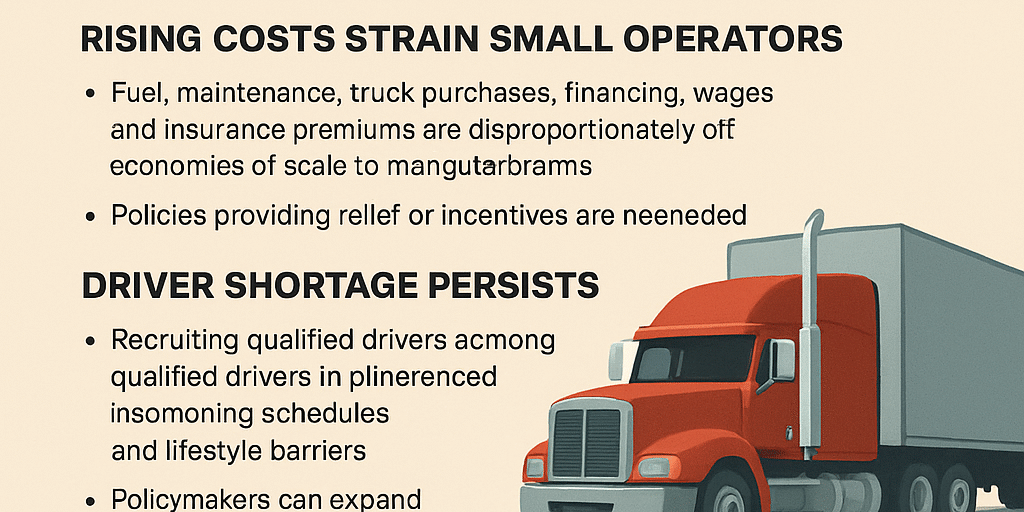
Canada’s trucking sector in 2025 is navigating a complex landscape of economic, operational, and environmental pressures that directly affect owner-operators and the policymakers shaping industry standards. Extreme weather events such as wildfires, floods, hailstorms, and severe winter conditions are occurring more frequently, creating costly disruptions, damaging equipment, and increasing safety risks on major freight corridors. For owner-operators, this makes proactive climate-risk planning — including flexible routing, seasonal maintenance, and stronger contingency protocols — a critical component of staying operational and insurable. Rising costs across the industry further compound these challenges. Fuel, maintenance, truck purchases, financing, wages, and insurance premiums have all climbed significantly, placing disproportionate strain on smaller operators who often lack the economies of scale enjoyed by larger fleets. This financial pressure underscores the need for policies that provide relief or incentives to ensure independent operators remain viable contributors to Canada’s supply chain.
At the same time, the persistent shortage of qualified drivers continues to destabilize the sector. Many operators face difficulty recruiting and retaining talent, particularly younger drivers, due to high training costs, demanding schedules, and lifestyle barriers. Expanding access to training programs, modernizing licensing pathways, and promoting trucking as a long-term, stable career could help alleviate this gap — areas where policymakers can make an immediate impact. Insurance market challenges further widen the divide between large carriers and small fleets. Many owner-operators face rising premiums, limited coverage options, or difficulty securing insurance altogether, which threatens their ability to operate legally and competitively. Addressing these inequities through regulatory reform and improved oversight would help ensure fair access to insurance across the industry.
Finally, consistent enforcement of safety, training, and compliance standards is essential for maintaining a fair and sustainable trucking environment. Poor practices, undertraining, and non-compliance among a minority of operators raise risk levels and drive up costs for everyone — especially small, compliant carriers who rely on maintaining a strong safety record to stay insured. Overall, strengthening industry standards, improving access to insurance and training, and supporting owner-operators through targeted policies are key steps toward ensuring a resilient, competitive trucking sector in Canada.