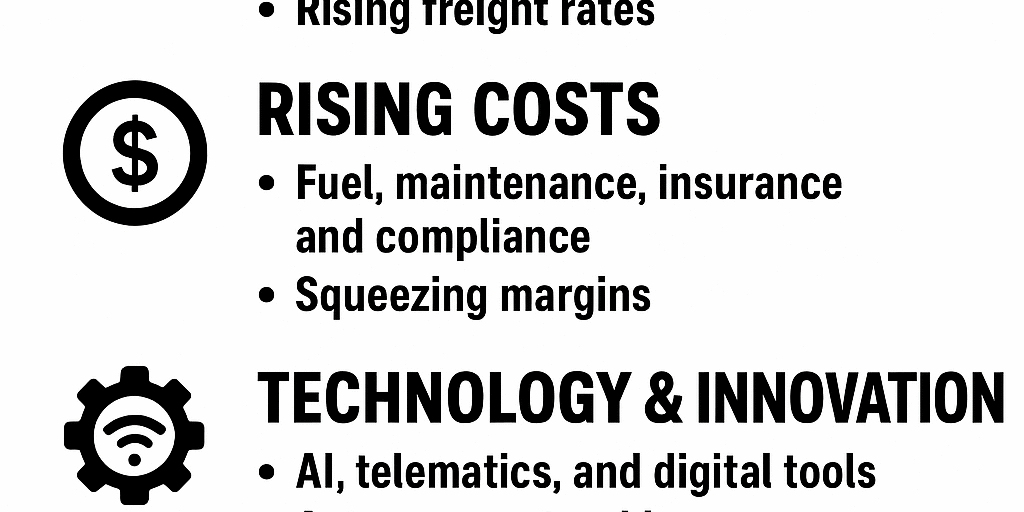
The trucking industry is navigating a complex mix of challenges and opportunities that are reshaping the way goods move across North America. A persistent shortage of qualified drivers continues to drive up freight rates, while non-driving roles such as management and administrative positions are seeing significant reductions, putting additional pressure on operations. At the same time, rising costs—spanning fuel, maintenance, insurance, and regulatory compliance—are squeezing margins, particularly for smaller fleets struggling to stay profitable. Regulatory and environmental pressures are mounting as well, with stricter emissions standards and a growing push toward zero-emission vehicles. Adoption of these greener technologies is still slow, held back by high capital costs and limited charging infrastructure, forcing fleet operators to carefully weigh investments against potential returns.
Technology is playing an increasingly transformative role. Companies are leveraging AI, telematics, and digital tools to optimize routing, improve safety, and reduce operational inefficiencies. Autonomous trucking is moving from concept to reality, with driverless commercial deliveries already occurring on public highways, hinting at a future where human drivers may share the road with self-driving fleets. Freight demand remains strong, with many logistics companies operating near full capacity, yet mismatches between truck availability and demand, along with cross-border trade disruptions from tariffs and policy shifts, are adding complexity.
Labor and sustainability concerns loom large. Driver shortages remain an existential threat, while regulatory compliance—especially around safety and emissions—continues to be a costly burden. Companies that successfully adopt technology, streamline operations, and embrace environmental sustainability are likely to gain a competitive edge in an industry under intense pressure. In short, the trucking industry is at a crossroads: balancing rising costs, labor shortages, technological innovation, and environmental expectations, all while keeping goods moving efficiently in a rapidly evolving market.