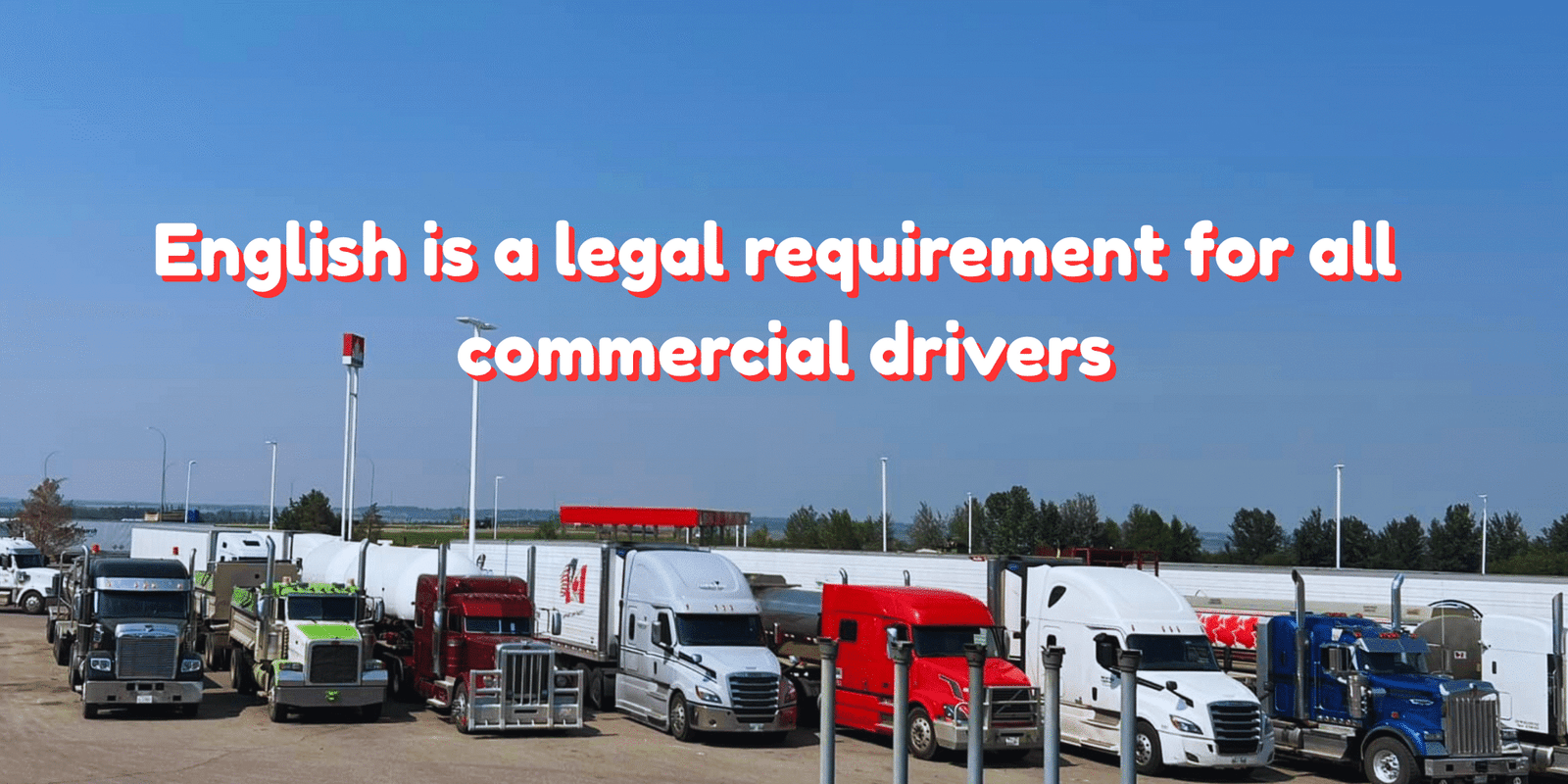
In the United States, the ability to communicate effectively in English is a legal requirement for all commercial drivers. According to Federal Motor Carrier Safety Administration (FMCSA) regulation 49 C.F.R. § 391.11(b)(2), every holder of a Commercial Driver’s License (CDL) must demonstrate sufficient English proficiency to converse with the general public, read and understand road signs, respond to official inquiries, and accurately complete required reports and documentation. This rule is rooted in public safety concerns, as effective communication is considered essential for preventing misunderstandings on the road, ensuring compliance with regulations, and enabling drivers to respond appropriately during inspections or emergencies. In recent years, U.S. authorities have increased enforcement of this provision. Inspectors may now administer English proficiency assessments at roadside checks, involving verbal interviews and recognition of highway signs. Drivers who fail these assessments may be placed out of service, meaning they are temporarily prohibited from operating a commercial vehicle until they can demonstrate compliance. It is important to note, however, that being placed out of service does not necessarily mean a CDL is permanently revoked; rather, it is a corrective action designed to uphold federal safety standards.

In Canada, the regulatory landscape is different. Canada recognizes two official languages—English and French—and allows provincial licensing authorities to conduct driver testing in either language. Under the National Safety Code (NSC) and provincial transportation ministries, applicants may even access translation assistance during testing in certain cases. As a result, a driver’s licence in Canada is unlikely to be revoked solely for insufficient English proficiency, provided the individual meets the testing and safety criteria in one of the country’s official languages. However, for Canadian drivers engaged in cross-border trucking operations, compliance with U.S. language requirements becomes mandatory once they enter American jurisdiction. Canadian drivers who cannot communicate adequately in English may face being placed out of service while operating in the United States, even if their credentials remain valid in Canada.
Overall, while Canada’s bilingual framework provides more flexibility for drivers whose first language is not English, those engaged in international freight movement must meet the higher linguistic standards enforced in the United States. Trucking companies are therefore encouraged to provide language training and compliance support to their drivers, particularly for cross-border operations, to avoid regulatory penalties and ensure safe, efficient communication on the road.